





















































































Poker Principles Types Rules Strategy & History Britannica

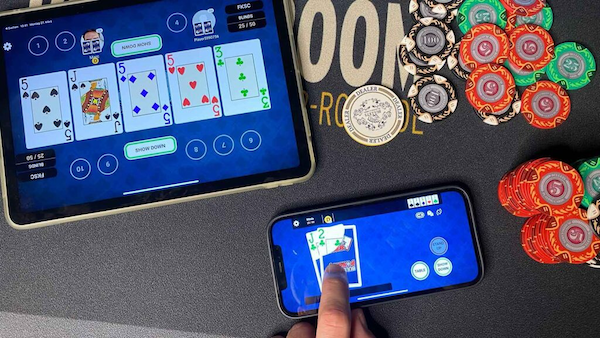
Poker is a card game played in various forms throughout the world in which a player must call (i.e., match) the bet, raise (i.e., increase) the bet, or concede (i.e., fold). That game is played in casinos, in clubs, and over the Internet.
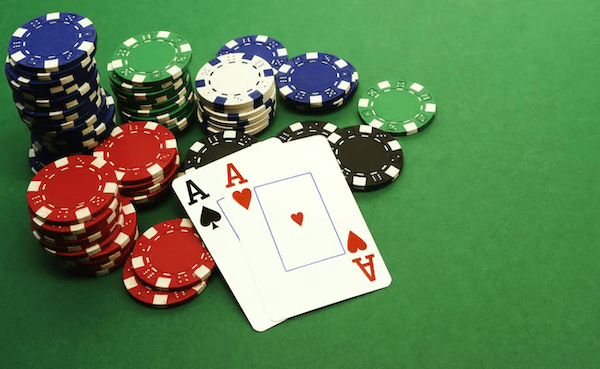
The best hand in poker is a royal flush: an ace, king, queen, jack, and 10, all in the same suit. Below are all poker hands ranked, from best to worst.
-
- Royal flush: Ace, king, queen, jack, and 10, all in the same suit.
-
- Straight flush: Five cards of sequential rank that are all of the same suit.
-
- Four of a kind: Four cards of the same rank, plus one of another rank.
-
- Full House: Three cards of the same rank and a pair of another rank.
-
- Flush: Five cards of the same suit that are not of sequential rank.
-
- Straight: Five cards of sequential order that are not of the same suit.
-
- Three of a kind: Three cards of the same rank, plus two that are not a pair.
-
- Two pair: Two differently ranked pairs, each consisting of cards of the same rank.
-
- One pair: Two cards of the same rank, plus three cards of unmatched ranks.
-
- High card: Any other configuration of cards, ranked from highest to lowest.
Casinos make money on poker by taking a “rake.” This is a percentage of the pot. Casinos typically use a fixed rake, which can range from 2 to 10 percent of the pot. Less common is an hourly rake, where players are required to pay a fee every hour.
In poker a flush is five cards of the same suit that are not of sequential rank. A flush is the fifth best hand in poker. There’s also a royal flush, which is the best hand: an ace, king, queen, jack, and 10, all in the same suit.
Poker originated in North America and evolved from earlier games like primero, brag, and poque. It was adapted to the modern 52-card deck by 1834, and most of the innovations came in the decade 1861–70, probably because of the great amount of poker played by soldiers on both sides in the American Civil War. Poker later spread globally, aided by the American Expeditionary Force during World War I.
There are forms of poker suitable to any number of players from 2 to 14, but in most forms the ideal number is 6, 7, or 8 players. The object is to win the “pot,” which is the aggregate of all bets made by all players in any one deal. The pot may be won either by having the highest-ranking poker hand or by making a bet that no other player calls. The following principles apply to nearly all forms of poker.
Cards
Poker is almost always played with the standard 52-card deck, the playing cards in each of the four suits (spades, hearts, diamonds, clubs) ranking A (high), K, Q, J, 10, 9, 8, 7, 6, 5, 4, 3, 2, A (low only in the straight a series of five cards numbered consecutively or straight flush a series of five cards numbered consecutively within the same suit 5-4-3-2-A and in certain variants described below).
In social play, especially in “dealer’s choice” (i.e., a card-playing session in which each player takes a turn at dealing the cards and selecting the game), certain cards may be designated wild cards. A wild card stands for any other card its holder wishes to name. There are many methods of introducing wild cards into the game. The most popular are:
- Joker. A 53-card pack is used, including the joker as a wild card.
- Bug. The same 53-card pack including the joker is used, but the joker—here called the bug—counts only as a fifth ace or to fill a flush a series of five cards of the same suit, a straight, or certain special hands.
- Deuces wild. All four deuces (2s) are wild cards.
- One-eyes. In the standard pack the king of diamonds, jack of spades, and jack of hearts are the only cards shown in profile. They are often designated as wild cards. Poker is almost always played with the standard 52-card deck, the playing cards in each of the four suits (spades, hearts, diamonds, clubs) ranking A (high), K, Q, J, 10, 9, 8, 7, 6, 5, 4, 3, 2, A (low only in the straight a series of five cards numbered consecutively or straight flush a series of five cards numbered consecutively within the same suit 5-4-3-2-A and in certain variants described below).
In social play, especially in “dealer’s choice” (i.e., a card-playing session in which each player takes a turn at dealing the cards and selecting the game), certain cards may be designated wild cards. A wild card stands for any other card its holder wishes to name. There are many methods of introducing wild cards into the game. The most popular are:
- Joker. A 53-card pack is used, including the joker as a wild card.
- Bug. The same 53-card pack including the joker is used, but the joker—here called the bug—counts only as a fifth ace or to fill a flush a series of five cards of the same suit, a straight, or certain special hands.
- Deuces wild. All four deuces (2s) are wild cards.
- One-eyes. In the standard pack the king of diamonds, jack of spades, and jack of hearts are the only cards shown in profile. They are often designated as wild cards.
Rank of poker hands
The rank of standard poker hands is determined by their odds (probability). Two or more identical hands tie and divide any winning equally. The suits have no relative rank in poker. When there is any wild card in the game, the highest possible hand is five of a kind, which beats any straight flush. When there are several wild cards, there may be identical fours of a kind or threes of a kind, in which case ties are broken by the highest unmatched cards or secondary pairs (in a full house a five-card hand made up of three of a kind and a pair).
The rank of standard poker hands is determined by their odds (probability). Two or more identical hands tie and divide any winning equally. The suits have no relative rank in poker. When there is any wild card in the game, the highest possible hand is five of a kind, which beats any straight flush. When there are several wild cards, there may be identical fours of a kind or threes of a kind, in which case ties are broken by the highest unmatched cards or secondary pairs (in a full house a five-card hand made up of three of a kind and a pair).
Deal
At the start of the game, any player takes a pack of cards and deals them in rotation to the left, one at a time faceup, until a jack appears. The player receiving that card becomes the first dealer. The turn to deal and the turn to bet always pass to the left from player to player. For each deal, any player may shuffle the cards, the dealer having the last right to shuffle. The dealer must offer the shuffled pack to the opponent to the right for a cut. If that player declines to cut, any other player may cut.
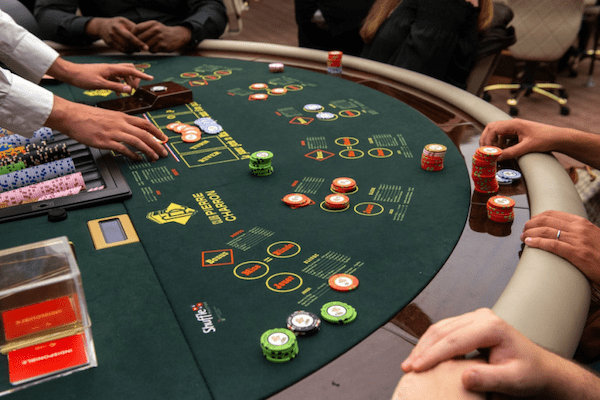
 Access for the whole family!Bundle Britannica Premium and Kids for the ultimate resource destination.SubscribeA professional dealer is used in poker clubs, casinos, and tournament play, where a round disc (known as a dealer button) is passed clockwise each hand to indicate the nominal dealer for betting purposes. Also, such environments almost invariably charge the players either by setting an hourly rental fee for their seats or by “raking” a small percentage (say, 5 percent) from each pot.
At the start of the game, any player takes a pack of cards and deals them in rotation to the left, one at a time faceup, until a jack appears. The player receiving that card becomes the first dealer. The turn to deal and the turn to bet always pass to the left from player to player. For each deal, any player may shuffle the cards, the dealer having the last right to shuffle. The dealer must offer the shuffled pack to the opponent to the right for a cut. If that player declines to cut, any other player may cut.
Access for the whole family!Bundle Britannica Premium and Kids for the ultimate resource destination.Subscribe A professional dealer is used in poker clubs, casinos, and tournament play, where a round disc (known as a dealer button) is passed clockwise each hand to indicate the nominal dealer for betting purposes. Also, such environments almost invariably charge the players either by setting an hourly rental fee for their seats or by “raking” a small percentage (say, 5 percent) from each pot.
Betting procedure
In each deal there are one or more betting intervals according to the specific poker variant. In each betting interval, one player, as designated by the rules of the variant being played, has the privilege or obligation of making the first bet. This player and each player in turn after him must place in the pot the number of chips (representing money, for which poker is almost invariably played) to make his total contribution to the pot at least equal to the total contribution of the player before him. When a player does this, he is said to be in the pot, or an active player. If a player declines to do this, he discards his hand and is said to drop or fold, and he may no longer compete for the pot.
Before the deal, each player may be required to make a contribution to the pot, called an ante. In each betting interval, the first player to make a bet is said to bet, a player who exactly meets the previous bet is said to call, and a player who bets more than the previous bettor is said to raise. In some variants, a player is permitted to check, which is to stay in without betting, provided no other player has made a bet in that betting interval. Since a player cannot raise his own bet, each betting interval ends when the betting turn has returned to the person who made the last raise or when all players have checked.
At the end of each betting interval except the last, dealing is resumed. At the end of the last betting interval, there is the “showdown,” in which each active player shows his full hand, and the highest-ranking hand wins the pot.
In each deal there are one or more betting intervals according to the specific poker variant. In each betting interval, one player, as designated by the rules of the variant being played, has the privilege or obligation of making the first bet. This player and each player in turn after him must place in the pot the number of chips (representing money, for which poker is almost invariably played) to make his total contribution to the pot at least equal to the total contribution of the player before him. When a player does this, he is said to be in the pot, or an active player. If a player declines to do this, he discards his hand and is said to drop or fold, and he may no longer compete for the pot.
Before the deal, each player may be required to make a contribution to the pot, called an ante. In each betting interval, the first player to make a bet is said to bet, a player who exactly meets the previous bet is said to call, and a player who bets more than the previous bettor is said to raise. In some variants, a player is permitted to check, which is to stay in without betting, provided no other player has made a bet in that betting interval. Since a player cannot raise his own bet, each betting interval ends when the betting turn has returned to the person who made the last raise or when all players have checked.
At the end of each betting interval except the last, dealing is resumed. At the end of the last betting interval, there is the “showdown,” in which each active player shows his full hand, and the highest-ranking hand wins the pot.
Betting limits
There are “no-limit” or “sky’s-the-limit” games, but in practice most poker games place some limit on what one may bet in any game. There are three popular methods.
Fixed limit
In fixed-limit games, no one may bet or raise by more than the established limit. In draw poker the limit is usually twice as much after the draw as before—for example, two chips before the draw, four chips after. In stud poker the limit is usually twice as much in the final betting interval as in previous betting intervals. (The higher limit applies also when any player’s exposed cards include a pair.) These respective forms of the game are described below. In a fixed-limit game a limit is usually placed on the number of raises that may be made in any betting interval.
Pot limit
In pot-limit contests, a player may bet or raise by no more than the amount in the pot at the time the bet or raise is made. When raising, the player may first put in the pot the number of chips required to call the previous bet and then raise by the number of chips in the pot. When pot limit is played, it is customary also to place a maximum limit on any bet or raise, regardless of the size of the pot.
Table stakes
This method most closely approximates the no-limit game. Each player’s limit is the number of chips he has on the table at the beginning of the deal. He may not bet more, but for this amount he may call any higher bet (go “all in”) and compete for the pot in the showdown. Other players having more chips may continue to bet, but their further bets go into one or more side pots in the manner decided among the players who contributed fully to the side pot. When a player drops out of any side pot, he drops out of the original pot as well, in effect surrendering his rights in the original pot to the player whose later bet he did not call. Thus, there may be different winners of the main pot and various side pots.
There are “no-limit” or “sky’s-the-limit” games, but in practice most poker games place some limit on what one may bet in any game. There are three popular methods.
Fixed limit
In fixed-limit games, no one may bet or raise by more than the established limit. In draw poker the limit is usually twice as much after the draw as before—for example, two chips before the draw, four chips after. In stud poker the limit is usually twice as much in the final betting interval as in previous betting intervals. (The higher limit applies also when any player’s exposed cards include a pair.) These respective forms of the game are described below. In a fixed-limit game a limit is usually placed on the number of raises that may be made in any betting interval.
In fixed-limit games, no one may bet or raise by more than the established limit. In draw poker the limit is usually twice as much after the draw as before—for example, two chips before the draw, four chips after. In stud poker the limit is usually twice as much in the final betting interval as in previous betting intervals. (The higher limit applies also when any player’s exposed cards include a pair.) These respective forms of the game are described below. In a fixed-limit game a limit is usually placed on the number of raises that may be made in any betting interval.
Pot limit
In pot-limit contests, a player may bet or raise by no more than the amount in the pot at the time the bet or raise is made. When raising, the player may first put in the pot the number of chips required to call the previous bet and then raise by the number of chips in the pot. When pot limit is played, it is customary also to place a maximum limit on any bet or raise, regardless of the size of the pot.
In pot-limit contests, a player may bet or raise by no more than the amount in the pot at the time the bet or raise is made. When raising, the player may first put in the pot the number of chips required to call the previous bet and then raise by the number of chips in the pot. When pot limit is played, it is customary also to place a maximum limit on any bet or raise, regardless of the size of the pot.
Table stakes
This method most closely approximates the no-limit game. Each player’s limit is the number of chips he has on the table at the beginning of the deal. He may not bet more, but for this amount he may call any higher bet (go “all in”) and compete for the pot in the showdown. Other players having more chips may continue to bet, but their further bets go into one or more side pots in the manner decided among the players who contributed fully to the side pot. When a player drops out of any side pot, he drops out of the original pot as well, in effect surrendering his rights in the original pot to the player whose later bet he did not call. Thus, there may be different winners of the main pot and various side pots.
This method most closely approximates the no-limit game. Each player’s limit is the number of chips he has on the table at the beginning of the deal. He may not bet more, but for this amount he may call any higher bet (go “all in”) and compete for the pot in the showdown. Other players having more chips may continue to bet, but their further bets go into one or more side pots in the manner decided among the players who contributed fully to the side pot. When a player drops out of any side pot, he drops out of the original pot as well, in effect surrendering his rights in the original pot to the player whose later bet he did not call. Thus, there may be different winners of the main pot and various side pots.
- poker,online poker,poker hands
- poker,online poker,poker hands
- poker,online poker,poker hands
FAQ
- poker,online poker,poker hands
- poker,online poker,poker hands
- poker,online poker,poker hands
- poker,online poker,poker hands
Is poker 100% gambling?
Yes. Poker can be classified as gambling. Poker is a casino card game in which players bet on the cards in their hands that they receive from a random distribution. Players wager money for a chance to win more on an uncertain outcome.١٦/٠٩/٢٠٢٤
poker,online poker,poker hands
- poker,online poker,poker hands
- poker,online poker,poker hands
- poker,online poker,poker hands
Is poker skill or luck?
It’s primarily a skill game, although luck plays a huge role. In any single given hand, luck is the predominant factor in who will win or lose. However, poker players don’t play a single hand. They play hand after hand after hand… and overall, skill dominates.
- poker,online poker,poker hands
poker,online poker,poker hands
What do poker feelings mean?
A blank expression, also known as a poker face, is a facial expression characterized by neutral positioning of the facial features, implying a lack of strong emotion. It may be caused by emotionlessness, depression, boredom or slight confusion, such as when a listener does not understand what has been said.
- poker,online poker,poker hands
poker,online poker,poker hands
What do you mean by poker?
po·ker ˈpō-kər. : any of several card games in which a player bets that the value of his or her hand is greater than that of the hands held by others, in which each subsequent player must either equal or raise the bet or drop out, and in which the player holding the highest hand at the end of the betting wins the pot.٠٣/٠٨/٢٠٢٥
- poker,online poker,poker hands
- poker,online poker,poker hands
- poker,online poker,poker hands
What is the order of hands in poker?
Poker Hands - What Beats What in Poker As shown in the poker hand rankings chart, the order of poker rankings (from the highest to the lowest) is: Royal Flush, Straight Flush, Four-of-a-Kind, Full House, Flush, Straight, Three-of-a-Kind, Two Pair, One Pair, High Card.
- poker,online poker,poker hands
- poker,online poker,poker hands
撲克牌型大小順序
撲克牌型大小順序從大到小依序是:皇家同花順、同花順、四條、葫蘆、同花、順子、三條、兩對、一對、高牌。這個順序適用於大多數標準撲克玩法,例如德
- poker,online poker,poker hands
poker,online poker,poker hands
美國哪些州允許線上撲克?2026年合法州完整指南
目前在美國,只有少數幾個州真正允許玩家在受監管的網站上用真錢玩線上撲克,而且大多數都有年齡限制(通常是 21 歲以上)和必須在州內登入才能玩的規定
poker,online poker,poker hands
poker,online poker,poker hands
2026最佳撲克網站!Natural8超猛推薦
哪個是最佳撲克網站? 你想找線上撲克玩嗎?很多人問「最佳撲克網站是哪個」,答案取決於你喜歡什麼,比如遊戲種類、安全度或獎金。根據最新評比,Na
poker,online poker,poker hands
- poker,online poker,poker hands
poker,online poker,poker hands
- poker,online poker,poker hands
一秒搞懂「摜蛋」是什麼?超夯撲克牌社交遊戲介紹
「摜蛋」是一種流行於中國的撲克牌遊戲,最早在 1960 年代左右起源於江蘇省淮安一帶,現在已經成為許多城市飯局、公司聚會、甚至政商交流場合常見的娛樂活
poker,online poker,poker hands
find good poker game on motorwork1993.com
本網站僅收集相關文章。如需查看原文,請複製並打開以下連結:Poker Principles Types Rules Strategy & History Britannica
poker,online poker,poker hands
- poker,online poker,poker hands